


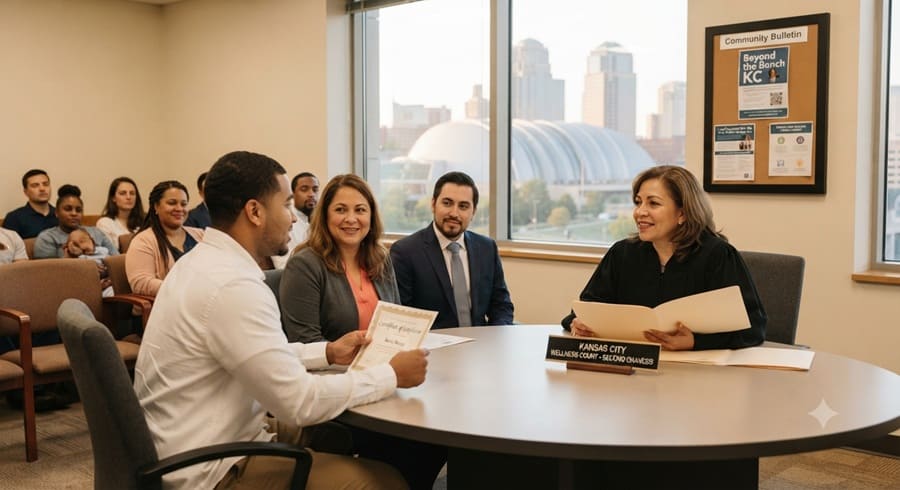
Kansas City Wellness Court: How the Program Creates Second Chances
One mistake does not determine someone’s future. That fundamental idea is the heart of Kansas City Wellness Court. In addition to punishment, the program helps people address the problems that led them into the court system. For many, it entails mental health care, treatment, ongoing support and personal growth. The objective is plain. Help people live better lives and make the neighborhood safer. That is why the Kansas City specialty courts have become so crucial to the local justice system. They know that real change starts with addressing the cause of harmful behavior, not just the symptoms. Groups like Beyond the Bench KC are helping disseminate that message around Kansas City. Their work helps fulfill the objective of Specialty Courts by raising public awareness and promoting community participation in programs that make a genuine difference.
An Alternate Way Forward
Courts used to close cases with fines, probation or jail sentences. Those results have their place. But they don’t always fix the problem that created the violation. Wellness Court comes at it differently. The program combines court oversight with therapy, counseling, regular check-ins and personal accountability. The participants must work hard. They honor appointments, meet court deadlines and stay devoted to their treatment. This isn’t the easy way. It is a structured one [1]. Let’s say you have a leaky roof. You can keep catching the drip in buckets, or you can fix the roof. Wellness Court is all about that restoration.
Who is this for?
Each case is unique. Wellness Court is not for everyone. Many of the participants had problems with mental health or other issues that impacted their decisions. The court looks at each case individually to see if someone is a good fit. There are a couple of aspects to consider:
- Criminal record
- Present charges
- Mental health needs
- Issues of public safety
- Ability to follow program rules
This court is looking for people who are ready for real change.
More Than Court Dates
The thing is. “Wellness Court is more than just going before a judge. Participants often get:
- Mental healthcare
- Personal Counseling
- Group counseling
- Case Management.
- Treatment with drugs or alcohol as necessary
- Assistance locating housing or work.
- Regular evaluations of progress
All the services are integrated. They are like fragments of a jigsaw puzzle, an image of recovery. The program includes opportunities for people to meet the judge. These meetings are not the same as court proceedings. The judge monitors progress, provides encouragement and manages obstacles as necessary.
Accountability Matters Still
Some say Wellness Court allows participants to shirk responsibility. That is not so. The program is a constant endeavor. Sanctions might come from missed visits, failed treatment regimens, or broken court regulations. Good progress is regularly rewarded and recognised. That balance is important. The participants recognize that their choices have genuine consequences, good or negative. These teachings help you develop healthy behaviors that stick over time, beyond the courtroom.
Why Do Second Chances Matter
We all know someone who has been through a difficult season. Maybe it was the tension. Maybe it was sickness. Maybe it was bad decisions paired with bad situations. “People can change with the right support and taking responsibility,” said Wellness Court. An opportunity does not erase the slate. It makes room for a better future. That future could mean returning to work, mending family connections, having stable housing or simply living without recurring engagement with the legal practice management system. Little victories frequently lead to great ones.
Creating Stronger Communities
The benefits are not only for the participants themselves. But families tend to grow stronger when people get therapy and not bounce around from arrest to arrest to arrest. Employers get reliable workers. Kids get more stable households. Communities can tell the difference.” If fewer people return to crime, public safety is better. Resources are more effectively exploited. Taxpayers also profit from a decreased need for long-term detention for eligible participants. There is something to be won for all.
The Role of the Community Too
Recovery is seldom solitary. Family members, friends, employers, counselors and community organizations all have essential roles. From then, Beyond the Bench KC continued their efforts. The organization helps residents understand how Specialty Courts create sustainable change. They educate and do community outreach to help people see rehabilitation as part of justice, not outside it. Public opinion is slow to change. Honest talks do help.
Commitment is Key to Success
Wellness Court is not a quick-fix. Participants are often subject to rigorous court rules and can spend months working through treatment regimens. Sometimes progress comes in baby steps. There may even be some setbacks along the road. That’s all right. The key thing is to keep on going. With support, structure and accountability, many participants leave the program with stronger skills and healthier lifestyles. That’s what a second chance looks like. Not ideal. Simply better than yesterday.
FAQ
- What is the Kansas City Wellness Court?
Kansas City Wellness Court is a Specialty Court program that provides court supervision and treatment for eligible participants. The court goes beyond punishment to treat mental health and other issues that may have contributed to the criminal activity. Participants are required to adhere to treatment regimens and are subject to regular court reviews.
- Who can participate in Wellness Court?
Eligibility is determined on a case-by-case basis. These include criminal history, pending charges, mental health requirements, public safety concerns and a person’s desire to participate. Not all defendants will be eligible.
- Is Wellness Court easier than the conventional court process?
No. Many participants feel the program demands a lot of effort. Participants must attend therapy, follow court regulations, show up for regular reviews and stay committed to their recovery. The program demands continuous accountability during the life of the program.
- How long does the Wellness Court last?
Duration: This will vary by each participant’s progress and treatment plan. Some people complete the program in just a few months, while others take longer. Progress is contingent on achieving court objectives and program conditions.
- What is the importance of Kansas City Specialty Courts?
Kansas City Specialty Courts are about helping solve problems that commonly bring people into the justice system. By combining treatment, monitoring and responsibility, these courts help prevent recurrent offenses, promote public safety, strengthen families and provide qualified participants a chance to create stable, productive lives.
