


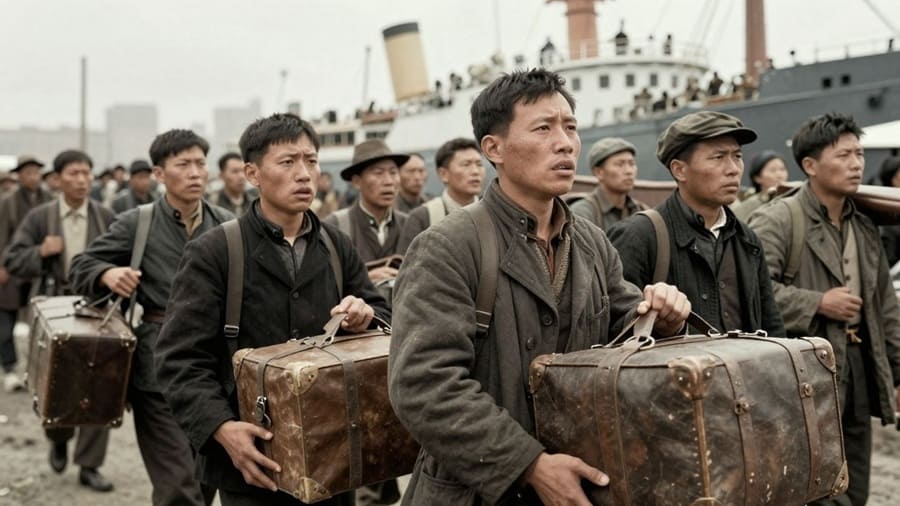
What challenges did Chinese immigrants face in America
Moving to a new country is never easy, and for Chinese immigrants in America, especially back in the 19th century, it was a really tough road. They faced a whole bunch of hurdles, from outright hate and unfair laws to just trying to get by day-to-day. It’s a story about struggle, resilience, and what challenges did Chinese immigrants face in America.
Key Takeaways
- Chinese immigrants often dealt with serious racism and violence, facing attacks and having little legal protection.
- Big differences in language and culture made it hard for them to settle in, especially coming from rural areas to big cities.
- Laws were created to target them, like special taxes and rules preventing them from becoming citizens or marrying outside their race, culminating in the Chinese Exclusion Act.
- Many worked in tough jobs, sometimes under debt from the credit-ticket system, and faced resentment from other workers, with limited options for advancement.
- Immigration policies led to families being split apart, creating a society with mostly men and low birth rates, though they formed groups for mutual support.
Facing Discrimination and Violence
Experiences of Overt Racism and Distrust
When Chinese immigrants first arrived in America, they weren’t exactly met with open arms. It was more like a cold shoulder, often turning into outright hostility. People just didn’t trust them, seeing them as outsiders who didn’t belong. This distrust wasn’t just a quiet feeling; it showed up in everyday life, making simple tasks feel like a battle. This pervasive sense of being unwelcome was a constant shadow.
Targeted by Violent Attacks and Massacres
Things got really bad, really fast for many Chinese immigrants. They weren’t just disliked; they were actively targeted. There were attacks, sometimes on a huge scale, where communities were brutalized. Places like Rock Springs, Wyoming, saw horrific events where Chinese workers were driven out and killed. It was a terrifying time, and the perpetrators often faced no real consequences. It felt like their lives just didn’t matter to a lot of people back then. The history of violence against Chinese immigrants is a dark chapter in American history.
Racial Hatred and Lack of Legal Recourse
It wasn’t just random acts of violence. There was a deep-seated racial hatred that fueled much of the animosity. This hatred meant that when things did go wrong, and they often did, there was little to no help from the legal system. Chinese immigrants were often denied justice, even when they were victims of terrible crimes. It was a system that seemed designed to keep them down and unprotected. This lack of legal recourse made them incredibly vulnerable.
The climate of fear and violence was so intense that it’s hard to overstate the daily anxiety many must have felt. Simply existing as a Chinese person in America could be a dangerous act.
Navigating Cultural and Language Barriers
Arriving in a new country is tough, and for Chinese immigrants, it was a whole different ballgame. They landed in America often not speaking a lick of English, which, let’s be honest, makes everything harder. Imagine trying to buy groceries or ask for directions when you can’t understand a word. It was a daily struggle.
Struggles with English Comprehension
This wasn’t just about not knowing words; it was about a complete lack of familiarity with Western ways of talking and interacting. Many came from rural parts of China, so the bustling, fast-paced cities of America were a shock. Trying to figure out job applications, understand street signs, or even just chat with neighbors was a huge hurdle. It’s estimated that while many Asian immigrants eventually learn English, a significant portion still face language barriers even after years in the U.S. Noe-Bustamante, Mora, & Ruiz, 2022.
Adjusting to Western Culture and Urban Life
Beyond language, the whole culture was different. Social customs, food, and even the way people behaved in public spaces were unfamiliar. They were used to one way of life, and suddenly they were dropped into another. This culture shock was real, and it made simple tasks feel overwhelming. It’s tough when you don’t know the unwritten rules of how things work.
Maintaining Cultural Identity Amidst Assimilation Pressures
So, you’ve got these folks trying to learn a new language and fit into a new culture, but they also wanted to hold onto who they were. It was a balancing act. They had to adapt to survive and get by, but there was also a strong pull to keep their traditions alive. This often meant sticking close to other Chinese immigrants, forming communities where they could speak their language and practice their customs. It was a way to find comfort and support in a world that often felt alien. The challenges of intercultural communication were significant for these newcomers.
Legal and Political Obstacles
Imposed Special Taxes and Discriminatory Laws
When Chinese immigrants first arrived, they ran into a lot of legal hurdles that other groups didn’t really face. It wasn’t just about being looked down upon; there were actual laws designed to make life difficult. For instance, many Western states, especially California, slapped on special taxes. The Foreign Miners’ License tax is a prime example. If you were a foreign miner and didn’t want to become a citizen, you had to pay a monthly fee. This was a big deal because becoming a citizen was already nearly impossible for Chinese immigrants. The Naturalization Act of 1790 basically said only “free white persons” could become citizens, which shut the door for most Asian immigrants right from the start. It felt like the system was rigged against them.
Prohibitions on Marriage and Citizenship
Beyond taxes, the government put up other barriers. There were laws that stopped Chinese men from marrying white women. This wasn’t just about social prejudice; it was a way to prevent the Chinese population from growing and integrating further. If you couldn’t marry and have a family, it made establishing deep roots in America incredibly tough. On top of that, as mentioned, they were largely barred from becoming citizens. This meant they didn’t have the same rights as citizens, couldn’t vote, and had limited legal protections. It created a permanent underclass, stuck in a sort of limbo.
The Impact of the Chinese Exclusion Act
But the biggest legal blow had to be the Chinese Exclusion Act of 1882. This law was huge. It stopped all Chinese laborers from coming to the United States. It wasn’t just a temporary measure either; it was renewed and extended, eventually becoming permanent until it was finally repealed in 1943. This act didn’t just halt new immigration; it also made it hard for those already here to stay or return if they left. It sent a clear message that Chinese people were not welcome. This act really shaped the experience of Chinese immigrants for decades, creating immense hardship and uncertainty. It was a dark period for Chinese immigrants facing discrimination.
The legal and political landscape was actively hostile, creating a system where Chinese immigrants were systematically disadvantaged and excluded from full participation in American society. Laws were not neutral; they were tools used to enforce racial and economic hierarchies.
Economic Hardships and Labor Exploitation
When Chinese immigrants in the United States arrived, they often found themselves in tough economic situations. Many came with little money and faced a job market that wasn’t exactly welcoming. The system they often entered was the credit-ticket system. This meant they borrowed money for their passage to America and had to work to pay it back, often at high interest. It was basically a form of debt bondage, and it kept many in a cycle of poverty for years.
The Credit-Ticket System and Debt Bondage
This credit-ticket system was a major hurdle. Families back home often relied on the money sent from abroad, so immigrants felt immense pressure to keep working, even in terrible conditions. It wasn’t uncommon for workers to be indebted for a long time, making it hard to save money or improve their lives. This system really tied them to their employers.
Competition and Resentment from Other Workers
Chinese laborers often took on jobs that others didn’t want, like dangerous work in mines or railroads, and they did it for lower wages. This made them indispensable to some businesses looking to cut costs. However, it also created a lot of resentment from other workers, who saw them as competition and blamed them for driving down wages. This tension sometimes led to conflict and made it harder for Chinese immigrants to find steady work or join labor unions. They were often caught between employers wanting cheap labor and other workers feeling threatened.
Limited Opportunities Beyond Labor Roles
Because of discrimination and language barriers, most Chinese immigrants were stuck in low-paying, physically demanding jobs. Think mining, railroad construction, factory work, or running small businesses like laundries and restaurants. It was tough to move up or into different fields. This lack of opportunity meant that many Chinese families faced long periods of separation, as men worked for years to send money home. The anti-Chinese sentiment was so strong that it fueled policies designed to keep them in these limited roles, contributing to the overall economic struggles faced by Chinese immigrants in the United States.
The economic landscape for Chinese immigrants was marked by systemic disadvantages. From the initial debt incurred through the credit-ticket system to the constant pressure of low wages and the exclusion from mainstream labor organizations, their ability to achieve financial stability was severely hampered. This created a cycle of hardship that impacted generations.
Social and Familial Disruptions
Moving to a new country, especially one as different as America was for many Chinese immigrants, really messed with their family lives. It wasn’t just about finding a place to live or a job; it was about being torn away from loved ones, sometimes for years on end. The journey itself was tough, and once here, the idea of bringing family over was a whole other battle.
Separation from Family and Difficulty in Reunification
Many men came over first, planning to send money back home and eventually bring their wives and children. But the laws and the sheer cost of travel made this incredibly difficult. For some, the separation lasted so long that children grew up barely knowing their fathers. It created a deep sense of longing and a constant worry about the well-being of those left behind. The process of reunification was often a bureaucratic nightmare, with endless paperwork and waiting periods. Some never got to see their families again.
The “Bachelor Society” and Low Birth Rates
Because so many men were separated from their families, and because laws often prevented Chinese women from immigrating or even marrying white men, many Chinese communities in America became known as “bachelor societies.” This meant a lot of single men living together, which had a big impact on the community’s social structure and led to very low birth rates among Chinese immigrants. It was a lonely existence for many, far from the family life they knew back home.
Formation of Benevolent Associations for Support
To cope with these challenges, Chinese immigrants started forming associations. These groups, often based on shared surnames or hometowns, became vital support systems. They helped with everything from finding housing and jobs to settling disputes and providing a sense of community. These organizations were a lifeline, offering a piece of home in a foreign land. They were a way to maintain connections and help each other survive the hardships of immigration and separation. These groups were a necessity for survival and offered a way to keep traditions alive, even when families were apart. Some of these associations still exist today, a testament to their importance in the early Chinese American experience.
Challenges to Cultural and Religious Practices
When Chinese immigrants arrived in America, they brought their own ways of life, including their beliefs and traditions. It wasn’t always easy for these practices to find a place in the new country. Many newcomers held onto their familiar customs, like Confucianism, ancestor worship, Buddhism, or Taoism. Some had already been exposed to Christianity back home, where missionaries had been trying to spread the faith with limited success. This background meant that when they encountered Christian missionaries in America, the message didn’t always land.
Forced Adherence to Foreign Customs
It wasn’t just about religious beliefs; everyday customs were also a point of friction. For instance, the Qing dynasty had a rule forcing Han Chinese men to wear their hair in a specific style – a queue, or braid. This was a sign of submission to Manchu rule. Because many Chinese immigrants planned to return to China to see their families, they couldn’t just cut off this hairstyle, as it would have caused serious trouble for them back home. This meant they had to maintain a look that marked them as different in America, making assimilation harder.
Limited Reception of Christian Missionary Efforts
Despite the efforts of missionaries, the number of Chinese immigrants who converted to Christianity remained quite low. Estimates suggest that before the Chinese Exclusion Act in 1882, fewer than 20% of Chinese immigrants had accepted Christian teachings. This lack of receptiveness wasn’t necessarily a rejection of faith itself, but likely tied to the broader difficulties they faced in integrating into American society. As Michael Luo’s work shows, the relationship between Chinese immigrants and American Christian culture was complex, marked by both challenges and unique responses to faith.
Maintaining Traditional Beliefs in a New Land
Trying to keep their own cultural and religious identity while living in America was a constant balancing act. The language barrier, the unfamiliarity with Western ways, and the constant pressure to conform made it tough. Yet, many found ways to preserve their heritage. The formation of benevolent associations, for example, provided a sense of community and a space where traditional practices could be shared and maintained. These organizations became vital support systems, helping immigrants cope with the many difficulties they encountered, including the struggle to keep their cultural and religious practices alive in a foreign land. The impact of laws like the Chinese Exclusion Act also played a role in shaping the religious landscape for Chinese Americans.
The immigrants’ commitment to their existing beliefs and practices was strong, often serving as a bedrock of identity in the face of overwhelming societal pressures to change. This resilience in maintaining their heritage was a quiet but powerful act of resistance.
Looking Back, Moving Forward
So, yeah, Chinese immigrants really went through it when they first got to America. They faced a ton of hurdles, from not knowing the language and feeling lost in big cities to dealing with outright racism and unfair laws. It wasn’t easy, and they were often treated worse than other groups. But despite all that, they stuck it out, built communities, and found ways to survive and even thrive. Their story is a big part of America’s history, showing a lot of grit and resilience in the face of some pretty tough times. It’s a reminder of how far we’ve come, and maybe, how far we still have to go.
Frequently Asked Questions
What kind of unfair treatment did Chinese immigrants face?
Chinese immigrants often dealt with harsh racism and were sometimes attacked or even killed. They faced prejudice from many Americans, and sadly, the law didn’t always protect them. This led to a lot of fear and hardship.
Why was it hard for Chinese immigrants to fit in?
Many Chinese immigrants didn’t know English when they arrived, making it tough to communicate. They also came from rural areas and found it difficult to get used to big American cities and different ways of life. Trying to keep their own culture while adapting was a constant challenge.
Were there laws that specifically targeted Chinese immigrants?
Yes, there were many laws designed to make life difficult for Chinese immigrants. They had to pay special taxes, were often forbidden to marry people of other races, and were denied the chance to become U.S. citizens. The Chinese Exclusion Act was a major law that stopped Chinese people from coming to America for many years.
Did Chinese immigrants have trouble finding good jobs?
Many Chinese immigrants had to take difficult and low-paying jobs, often working under a system where they owed money for their passage. They faced anger and jealousy from other workers who felt they were taking jobs. Their options for work were usually very limited.
How did immigration affect Chinese families?
Many men had to leave their wives and children behind in China, and it was very hard for them to reunite. This created communities where most people were single men, leading to fewer Chinese children being born in America. They formed groups to help each other out.
Did Chinese immigrants have trouble practicing their own religions or customs?
It was challenging for Chinese immigrants to keep their traditional beliefs and ways of life. They were sometimes pressured to adopt American customs. While some tried to share Christianity, many Chinese immigrants preferred to stick with their own religions like Buddhism or ancestor worship.