


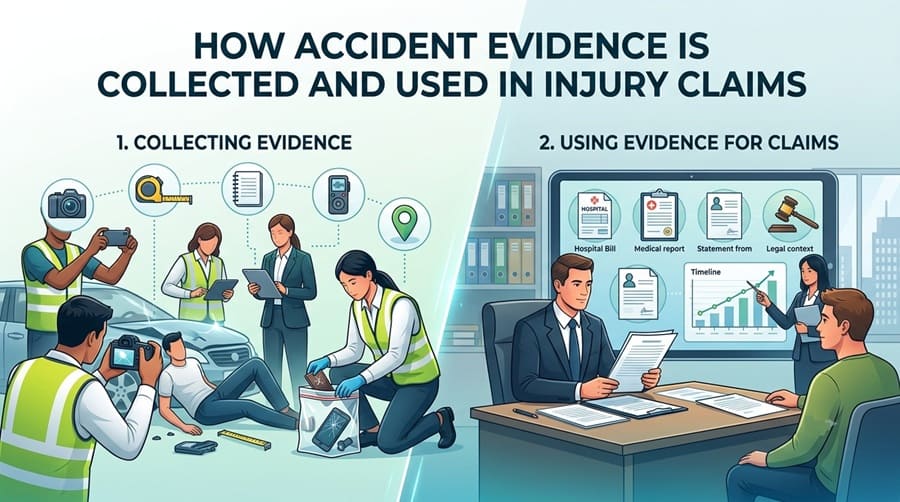
How Accident Evidence Is Collected and Used in Injury Claims
By James T. Ponton, Attorney at Law — Law Office of James T. Ponton, LLC (Atlanta, GA)
After a crash, the facts can feel slippery. You know you were hurt, you know your life changed fast, and yet the whole claim may come down to details you did not even realize mattered in the moment. A photo, a witness name, a police report, a black box download, an ER record. That is usually where stress sets in. You are trying to heal, bills are coming in, and someone on the other side is already building a version of events that may not match what happened. If you’re looking into your options after a wreck, connecting with an experienced car accident lawyer Atlanta early can help preserve evidence and protect your side of the story.
How accident evidence is collected and used in injury claims often decides whether your case feels clear or becomes a fight. The short version is simple. Evidence shows what happened, who caused it, how serious the injuries are, and how those injuries affect your daily life. The earlier that proof is found and preserved, the harder it is for an insurer to minimize your claim.
Accident evidence builds the story insurers and courts rely on
Evidence in a personal injury claim is not limited to dramatic crash scene photos. It usually comes from several places at once. Police reports may identify drivers, road conditions, and early statements. Medical records connect the collision to your injuries and document treatment over time. Witness statements can confirm speed, traffic signals, or distracted driving. Vehicle damage can show force and angle of impact. Phone records, surveillance footage, and business security video may fill in gaps when memories conflict.
Some crashes also involve technical data. The National Highway Traffic Safety Administration studies severe crashes through its Special Crash Investigations program, which reflects how much detail can matter in understanding collision mechanics. In individual claims, similar principles apply. Skid marks, impact points, debris fields, and roadway design can support or challenge what each driver says happened.
This matters because insurance companies do not pay based on sympathy. They pay based on proof. If the evidence is thin, they may argue your injuries were preexisting, that the crash was minor, or that you shared more fault than you did. If the evidence is strong, those arguments get narrower fast.
In Georgia, that proof carries extra weight because of how fault is measured. Under the state’s modified comparative negligence rule, O.C.G.A. § 51-12-33, an injured person can recover damages only if they are found less than 50 percent at fault; anyone found 50 percent or more responsible recovers nothing, and any award that is granted is reduced by the injured person’s own percentage of fault. That threshold is exactly what insurers push against when the evidence is thin, which is why solid documentation of what happened on the road matters just as much in a Fulton County claim as it does anywhere else.
Injury claim documentation often decides the value of your case
Many people think fault is the whole case. It is only half. You also need to prove damages, and that is where injury claim documentation becomes just as important as crash scene evidence. Hospital intake notes, imaging results, specialist referrals, physical therapy records, prescription history, work restrictions, and wage loss records all help show what this injury has cost you.
The timeline matters. If you wait weeks to seek care, the insurer may say something else caused the pain. If you miss treatment appointments, they may argue you were not badly hurt. If your records are vague, they may downplay future care needs. You may know your back pain started the day of the crash, but the claim runs on what can be shown on paper.
National injury data also shows how often serious medical treatment follows traumatic events. The CDC tracks injury-related hospital use, and those records exist for a reason. Medical documentation is one of the strongest ways to connect an accident to real physical harm.
Electronic crash data can support or challenge what drivers say
Modern vehicles can store data that helps reconstruct a collision. Speed, braking, steering input, seat belt use, and other pre-crash information may be available through an event data recorder. NHTSA explains this technology on its event data recorder resource. In the right case, that information can confirm sudden braking, lack of braking, or the timing of impact.
This kind of proof can be powerful when stories change. A driver may insist they were going the speed limit, then vehicle data suggests otherwise. A defense may claim you stopped short, yet roadway marks and electronic data point to distracted driving from behind. Evidence does not always settle every issue, but it narrows the room for spin.
Evidence collection in accident cases also includes preserving what might disappear. Security footage is often erased within days. Damaged vehicles get repaired or totaled. Witnesses move, forget details, or stop responding. That is one reason early action matters so much in a personal injury lawyer case review.
Waiting to gather proof gives the insurance company an opening
You can feel the pressure after a crash to “see how things go” before doing anything formal. That instinct is understandable, but delay creates problems. The scene changes, records scatter, and the other side gets time to frame the claim first. If liability is disputed, even a good case can weaken when physical evidence is gone.
Here is how the risks usually compare:
| Approach | What Usually Gets Preserved | Main Risk | Likely Effect on Claim |
| Handling evidence on your own right away | Phone photos, basic witness names, immediate symptoms, repair estimates | Missing technical data, incomplete records, lost footage | Can help early, but gaps may reduce leverage |
| Waiting weeks before acting | Medical records from later treatment, some insurer paperwork | Faded memories, deleted video, repaired vehicles, disputed timeline | Often leads to lower offers and more blame shifting |
| Early legal and investigative support | Scene evidence, records requests, witness statements, vehicle data, full damages file | Less risk of evidence loss | Stronger position for settlement or trial |
A Case Example: How Early Evidence Shaped the Outcome
In one Fulton County car accident case handled by the Law Office of James T. Ponton, LLC, a client was rear-ended in traffic and left with a serious arm injury and permanent scarring. Because the vehicle damage was photographed right away, emergency room records were pulled within days, and the other driver’s account was documented before it could shift, the firm was able to build a clear, connected record tying the collision to the full extent of the injury. That documentation supported a $900,000 recovery for the client. The identifying details here have been withheld for privacy. Results depend on the facts of each case and are not a guarantee of a similar outcome, but the pattern holds across the cases handled by our Atlanta car accident attorneys: claims backed by early, thorough evidence consistently resolve for more than claims where proof is thin or delayed.
Three steps you can take now to protect accident evidence
- Save everything connected to the crash. Keep photos, videos, receipts, medication lists, discharge papers, towing records, repair estimates, and every message from the insurance company. Start a simple folder on your phone and another on paper. Small items often become useful later.
- Get medical care and follow through. Tell providers where you hurt, when symptoms started, and how they affect sleep, work, driving, lifting, and daily routines. Then keep your appointments. Consistent treatment does more than support healing. It creates a record that is hard to dismiss.
- Speak with a personal injury lawyer before giving detailed statements. Recorded statements and quick settlement offers often come before the full picture is clear. Legal guidance can help preserve evidence, identify missing proof, and protect you from saying something that gets taken out of context.
Strong evidence gives your injury claim a fair chance
You do not need to have every answer right now. You do need to understand that proof drives the claim. Accident evidence in injury claims is what turns pain, disruption, and lost income into something that can be shown clearly and taken seriously. When the evidence is gathered early and used well, your case stands on facts instead of assumptions.
If you are dealing with a crash and the story already feels disputed, getting help now can protect evidence before it disappears. A personal injury lawyer can assess what exists, what is missing, and how to use it to support your claim.
Sources & Authorities
