


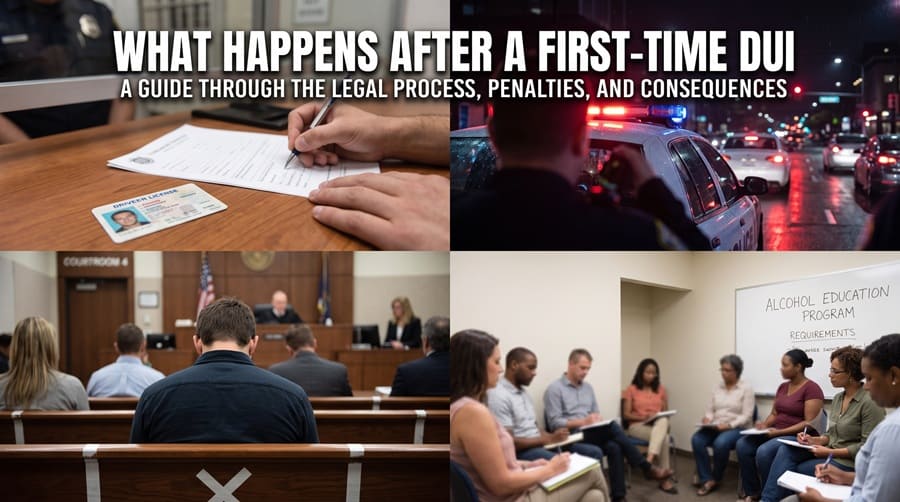
What Happens After a First-Time DUI in Colorado?
By Brent Martin, Esq., The Martin Law Firm (Montrose, CO) | Updated September 2026
Quick overview: An arrest is an accusation, not a conviction. A first DUI in Colorado runs on two separate tracks — a criminal court case and a DMV license matter — and the license track moves fast: you generally have only 7 days from the arrest to request a hearing, or the revocation becomes automatic.
A first DUI arrest can feel especially overwhelming in Colorado, whether it happens after a stop on an icy mountain pass, a late drive home from a Telluride event, or an ordinary trip through town. The arrest begins a legal process, but it does not decide the case. Early decisions about court dates, driving privileges, evidence, and communication can have lasting effects, which is why many people seek criminal defense guidance soon after an arrest. A first-time allegation may involve DUI, DUI per se, DWAI, or related traffic charges. The precise accusation, test results, driving behavior, prior history, and whether a crash or injury occurred can all affect what follows. Colorado treats the criminal court case and the driver’s license process as separate matters, so a person may need to respond to both.
What Happens Immediately After the Arrest?
After an arrest, an officer may take the driver to a station, jail, hospital, or another location for processing. A booking can include photographs, fingerprints, a personal property inventory, and a basic health screening. Some people are released with a summons and a future court date, while others may remain in custody until bond or release conditions are addressed. Release conditions vary by case. They may require appearing at every hearing, avoiding alcohol or drugs, completing testing, complying with travel restrictions, or avoiding contact with specific people. Written conditions should be read carefully. Violating them can lead to a new arrest, a warrant, changed bond terms, or other consequences.
The Driver’s License Issue Moves Fast — Here’s the Actual Deadline
A DUI arrest can trigger Colorado’s administrative Express Consent process, which is entirely separate from the criminal charge and runs on its own, much shorter clock. Under C.R.S. § 42-2-126, a driver who tests at 0.08 BAC or higher, or who refuses testing, generally has only 7 days from the date of arrest to request a hearing with the Department of Revenue’s Hearings Division to contest the license revocation. Miss that window, and the revocation takes effect automatically — the criminal court date does not pause or protect it. For a first offense at 0.08 or above, the administrative revocation period is generally 9 months; a first refusal generally carries a longer 1-year revocation. A person who receives an Express Consent notice should review it immediately and follow the instructions on that document rather than assuming the criminal case timeline applies.
The Colorado Judicial Branch explains that county courts handle misdemeanors and traffic matters, while district courts handle criminal cases more broadly. A first DUI is commonly filed in county court, although allegations involving injuries, felony-level conduct, or other charges may change where a case proceeds. People can use the state’s court docket search to confirm upcoming hearings with the required case information.
The First Court Appearance
The first hearing is generally not a trial. The court may identify the charges, confirm whether the person has counsel, review bond or release conditions, and set future dates. A defendant does not need to explain the incident in open court simply because a judge asks whether they understand the accusation. Arriving early matters, especially in Colorado mountain communities where weather, road closures, and long distances between towns can complicate travel. Bring the summons, release paperwork, identification, and any documents the court specifically requested. If an appearance cannot be made, do not ignore the problem. Contact the court or counsel promptly because a missed required appearance can result in a bench warrant.
Evidence Review and Discovery
After charges are filed, the defense can review discovery, which is the information exchanged in the case. The materials may include officer reports, dispatch or 911 recordings, body-camera footage, dash-camera footage, roadside-test observations, breath-test or blood-test records, photographs, and witness statements. A police report is important, but it is not the only account of what happened. For example, a short video may seem to show poor driving or an unsteady person. At the same time, a longer recording could provide context about road conditions, footwear, a medical issue, instructions given by an officer, or the timing of events. Evidence should be examined as a complete record rather than treated as conclusive based on one document.
Issues That May Need Closer Review
- Why the initial traffic stop or contact occurred.
- How roadside tests were explained and administered.
- Whether video and audio recordings are complete.
- The timing, handling, and documentation of chemical testing.
- Whether statements from officers or witnesses are consistent with other evidence.
Colorado law recognizes DUI and DUI per se as separate legal theories under C.R.S. § 42-4-1301, including a per se allegation based on a blood alcohol concentration of 0.08 or more at the time of driving or within two hours after driving. The applicable statutes, procedures, and penalties can change, so reviewing the current Colorado Revised Statutes is useful alongside case-specific legal advice.
A Case in Point
The following reflects the general pattern of the firm’s DUI defense work rather than a specific client’s story, out of respect for client confidentiality.
Brent Martin has handled more than 4,000 misdemeanor and felony criminal cases, including DUI matters, and has taken over 300 cases to jury or bench trial, as detailed in his professional background. That volume of experience matters specifically in DUI defense, where the outcome often turns on details easy to miss without a close review — whether a traffic stop was properly justified, whether a chemical test was administered and documented correctly, or whether body-camera footage tells a fuller story than the police report alone. Cases built on that kind of detailed review are frequently resolved through negotiation before ever reaching trial, but they only get there because the underlying evidence was examined carefully in the first place.
Motions, Negotiations, and Trial Preparation
Some DUI cases involve pretrial motions. Depending on the facts, a motion may challenge a traffic stop, a search, a statement, the handling of evidence, or the admission of particular evidence. Filing a motion does not guarantee that a charge will be dismissed, but it can require the court to decide an important legal issue before trial. Many cases are resolved through negotiations, while others proceed toward trial. Factors can include available evidence, chemical test results, driving conduct, prior record, collateral consequences, and each person’s goals. A plea decision is significant because it can affect criminal penalties, driving privileges, insurance, employment, professional licensing, and future legal exposure.
Potential Penalties and Other Consequences
Under C.R.S. § 42-4-1307, a first DUI conviction generally carries 5 days to 1 year in county jail, a fine of $600 to $1,000 (plus court costs and surcharges that can substantially increase the total), and 48 to 96 hours of useful public service, on top of the separate administrative license revocation described above. A lesser DWAI charge carries a narrower range. The court may suspend some mandatory minimum jail time if a driver completes alcohol treatment, but jail time generally cannot be suspended when a driver’s BAC is 0.20 or higher. The sentence depends on the offense, the facts, the court’s findings, and the statutory requirements.
Additional consequences can extend beyond the sentence. A case may affect work schedules, transportation in rural areas, commercial driving, education, housing applications, travel plans, and family responsibilities. Do not drive while a license is suspended, and do not assume that completing the court case automatically resolves every DMV requirement.
Mistakes to Avoid After a First DUI
- Ignoring a court date, DMV notice, or release condition.
- Posting details, videos, or opinions about the arrest on social media.
- Deleting messages, photographs, location data, or other potential evidence.
- Discussing the facts with witnesses in an effort to coordinate accounts.
- Driving before confirming that driving privileges are valid.
- Assuming that a first offense has no serious consequences, or that missing the 7-day Express Consent deadline can be fixed later.
Moving Forward
A first-time DUI in Colorado may involve fast deadlines, multiple agencies, and several stages of review. Staying organized, preserving records, following every order, and understanding the difference between the court case and the DMV matter can help prevent avoidable setbacks, because every arrest has different facts — a meaningful assessment should be based on the actual evidence, charge, county, and current law. License and traffic consequences work differently from state to state; this overview of how a related traffic offense is charged and penalized in Ohio is a useful point of comparison for how differently states structure these consequences, even outside the DUI context specifically.
Frequently Asked Questions
How many days do I have to request a DMV hearing after a Colorado DUI arrest? Generally 7 days from the date of arrest under C.R.S. § 42-2-126. Missing this deadline makes the license revocation automatic, regardless of what happens later in the criminal case.
What are the penalties for a first DUI conviction in Colorado? Generally, 5 days to 1 year in jail, a $600 to $1,000 fine, 48 to 96 hours of useful public service, and a separate 9-month administrative license revocation, under C.R.S. § 42-4-1307 and § 42-2-126.
Does the criminal DUI case and the DMV license case run on the same timeline? No. They’re separate proceedings with separate deadlines and separate courts or agencies. Resolving one does not automatically resolve the other.
What’s the difference between DUI, DUI per se, and DWAI in Colorado? DUI per se is based specifically on a BAC of 0.08 or more; DWAI (driving while ability impaired) is a lesser charge that can apply at a lower BAC. All three can arise from the same arrest depending on the facts and test results.
Authorities & Sources
- R.S. § 42-4-1301 — Driving Under the Influence; Driving While Ability Impaired
- R.S. § 42-4-1307 — DUI and DWAI Penalties
- R.S. § 42-2-126 — Express Consent Revocation Based on Administrative Determination
Disclaimer
This article is provided for general informational purposes only and does not constitute legal advice. Colorado DUI statutes, penalties, and Express Consent deadlines are fact-specific and can change. Reading this article does not create an attorney-client relationship. Anyone facing a DUI arrest in Colorado should consult a licensed Colorado criminal defense attorney promptly, given how quickly the license-related deadline in particular can pass.
