


What Qualifies as a Personal Injury Case in Florida?
You might be feeling like your whole life is split into “before” and “after.” Before the accident, things were normal. Afterward, everything became a blur of pain, paperwork, calls from insurance adjusters, and questions you never thought you would have to ask. Dolan Dobrinsky Rosenblum Bluestein can help you understand what comes next. Is this really a legal case, or is it just “one of those things” that you are supposed to accept and move on from?
Because of that confusion, you might be stuck in a painful middle ground. You know you were hurt. You know someone else played a role. Yet you are not sure whether what happened actually qualifies as a personal injury case in Florida. In simple terms, a personal injury case is about one thing. Someone’s careless or wrongful conduct caused you harm, and Florida law gives you a path to ask for compensation.
Here is the short version. If another person or business failed to act with reasonable care, that failure caused an accident, and you suffered physical, emotional, or financial harm as a result, you may have what Florida law recognizes as a personal injury claim. The details can get complex, but the core idea is straightforward. Wrongful conduct. Real injury. Legal responsibility.
So what actually counts as a personal injury case in Florida?
To understand what qualifies, it helps to know how Florida law looks at these situations. Law schools teach this in torts classes, like those described in the University of Florida’s course overview on torts and civil wrongs. In everyday terms, a “tort” is a civil wrong that causes harm and can lead to a lawsuit.
Most Florida personal injury cases are based on negligence. Negligence is a legal word for carelessness that crosses the line. For a negligence case, four things usually need to be true.
First, someone owed you a duty of care. For example, drivers must follow traffic laws. Property owners must keep their premises reasonably safe for visitors. Doctors must treat patients with accepted medical standards.
Second, they breached that duty. A driver texts instead of watching the road. A store ignores a leaking cooler. A landlord fails to fix a broken handrail. The behavior falls below what a reasonably careful person or business would do.
Third, that breach caused an accident or event. The distracted driver rear-ends you. You slip on the wet floor. You fall down the stairs because the rail gave way.
Fourth, you suffered actual damages. That can mean physical injuries, emotional trauma, medical bills, lost wages, or long-term pain that changes how you live your life.
Florida’s standard civil jury instructions, which judges use to explain the law to jurors, reflect these ideas in detail. You can see how negligence and damages are described in the Florida civil jury instructions. Those instructions are the roadmap juries follow when deciding if a person or business is legally responsible.
So where does that leave you? If your story fits those four parts, there is a good chance you have a case that a Florida personal injury lawyer would recognize.
Common Florida situations that may qualify as personal injury
Personal injury is a broad term. It is not limited to car accidents, although those are very common in Florida. Your situation might fall into one of these groups.
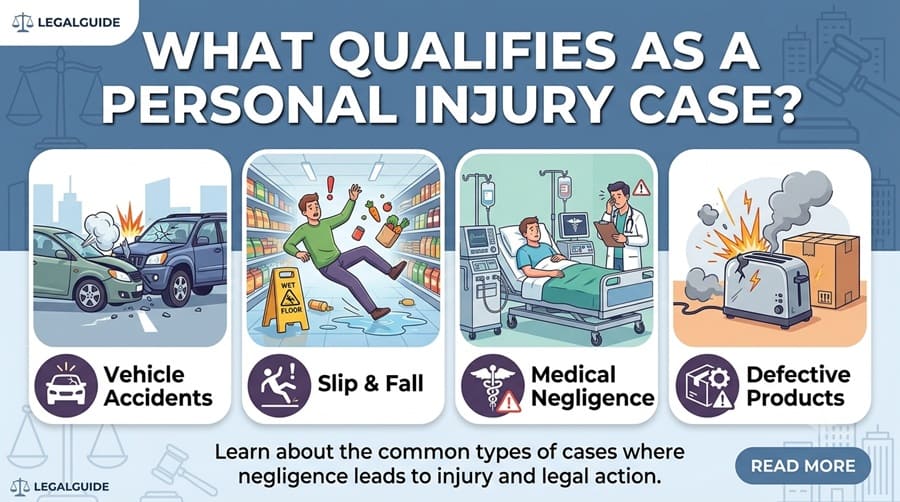
Car, truck, and motorcycle crashes. Rear-end collisions. Intersection crashes. Drunk driving. Hit and runs. Even in a no-fault state like Florida, serious injuries can step outside the no-fault system and lead to an injury case in Florida against the at-fault driver.
Slip and fall or trip and fall. Wet floors in grocery stores. Broken steps at apartment complexes. Poor lighting in parking lots. If a property owner knew or should have known about a danger and did not address it, that can create legal responsibility.
Injuries at businesses or on private property. Falling merchandise in big box stores. Dog bites at someone’s home. Unsafe conditions at hotels, pools, or amusement venues.
Medical negligence. Misdiagnosis. Medication errors. Surgical mistakes. These cases are more complex and follow special rules, but they still stem from the same idea. A professional failed to meet the standard of care, and you were harmed.
Product-related injuries. Defective car parts. Dangerous consumer products. Faulty safety equipment. If a product is unreasonably dangerous when used as intended, the manufacturer or others in the supply chain may be responsible.
Assaults and intentional harms. While criminal charges are handled by the state, victims can often bring civil personal injury claims for the physical and emotional harm they suffer.
Newer Florida laws also affect how some of these cases work. For example, legislative changes discussed in analyses like the Florida Senate’s review of Senate Bill 1060 show how the state continues to adjust rules that can impact liability and procedure. This is one reason the details of your situation matter so much.
Why the “gray areas” cause so much stress
Knowing the categories is one thing. Seeing your own life in them is another. You might be thinking, “Yes, that sounds like what happened to me, but I was partly at fault” or “The store manager apologized, so maybe I should just drop it.”
Florida uses a comparative fault system. That means you can sometimes recover damages even if you share some blame, though your compensation may be reduced. Insurance companies know this and may push the idea that you were mostly at fault, even when the evidence is not that clear.
On top of the legal questions, there are the emotional and financial strains. Medical appointments pull you away from work. Bills pile up. You may be unable to pick up your kids, sleep comfortably, or do the things that once felt simple. All the while, claim forms and adjuster calls demand decisions you do not feel ready to make.
This tension creates a powerful urge to settle fast or to give up entirely. The risk is that you accept far less than you need to cover long-term care or lost income, simply because you are exhausted and want it all to be over.
Should you handle it alone or get legal help? A practical comparison
One of the hardest choices is whether to try to manage everything yourself or to involve a professional. There is no single right answer for everyone, but there are clear tradeoffs to consider.
| Approach | When it might seem appealing | Common risks | Potential benefits |
| Handling the claim on your own | Minor injuries, low medical bills, obvious fault | You may undervalue your claim. You may miss legal deadlines. You may accept quick offers that do not cover future care. | No attorney fees. Full direct control over communications with insurers. |
| Working with a personal injury lawyer | Serious injuries, long recovery, disputed fault, or complex facts | You share a portion of the recovery as a fee. You need to invest some time in meetings and updates. | Guidance on what your claim may truly be worth. Help gathering evidence and dealing with insurers. Strategy informed by Florida statutes and jury instructions. |
When your injuries are more than a bruise and a few days of soreness, or when liability is disputed, it often makes sense to at least have a conversation with a lawyer about whether your situation qualifies as a strong personal injury case under Florida law.
Three concrete steps you can take right now
- Document everything while it is still fresh
Write down your memory of what happened. Include dates, times, weather, lighting, who was present, and any conversations with witnesses or employees. Keep photos of the scene, your injuries, damaged property, and anything else that shows what changed in your life. Save medical records, prescriptions, and receipts. Good documentation often becomes the backbone of a strong Florida personal injury case.
- Protect your health and your claim
Follow through with medical care, including follow-up appointments and recommended treatment. If you skip visits or stop care early, insurance companies may argue that you were not really hurt or that you made your injuries worse. Be honest and thorough with your doctors about your pain and limitations. Their notes can later help show the full impact of the accident.
- Be cautious with insurance conversations and written statements
Insurance adjusters may sound friendly, but their job is to limit payouts. Before giving a recorded statement or signing anything, pause. You can politely say you need time to review or talk with someone you trust. Early statements can be used against you if you later remember more details or if your injuries turn out to be more serious than they first appeared.
Finding clarity about your next step
If you are still wondering whether your situation truly qualifies as a personal injury case in Florida, know that you are not alone. These questions are hard even for people who work around the law every day. The legal system recognizes that when someone else’s careless or wrongful choices change your life, you should not have to shoulder the full burden alone.
You do not need to have everything figured out before you reach out for help. You simply need to recognize that what happened to you matters, and that your pain, your time, and your future have value under Florida law. From there, a conversation with a knowledgeable professional can help you understand your options and decide what feels right for you.
You have already done something important by looking for answers. The next step is choosing how you want to move forward, and who you want in your corner as you do.
