


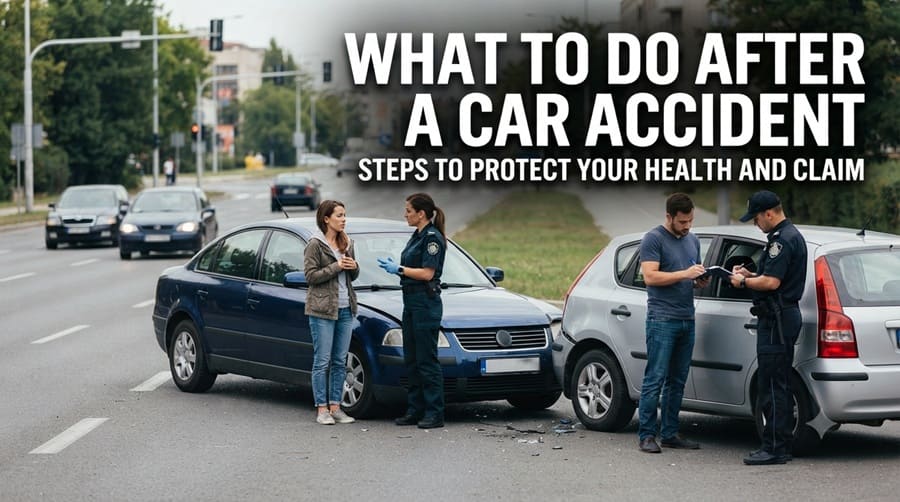
What to Do After a Car Accident in New Port Richey: Florida PIP, Evidence, Deadlines, and Insurance
By Lauren N. Weber, Esq. Florida Personal Injury Attorney | Weber Law Firm | New Port Richey, Florida | Last reviewed: September 2026
A crash can leave you dealing with medical symptoms, vehicle damage, insurance calls, missed work, and paperwork before you have had time to understand what happened. The priority is safety. After that, the most useful steps are usually practical ones: get appropriate medical care, preserve evidence, report the crash when required, review the insurance that may apply, and avoid signing away a claim before the medical picture is clear.
Florida law adds several deadlines and insurance rules that are easy to miss. Personal injury protection benefits generally require initial medical services within 14 days, many negligence lawsuits now have a two-year filing period, and Florida’s modified comparative-fault rule can bar recovery when an injured person is found more than 50% at fault.
This guide explains the steps that matter most after a crash in New Port Richey and elsewhere in Pasco County, with links to current Florida statutes and federal safety guidance.
1. Get to a Safe Location and Check for Injuries
Move out of active traffic if it can be done safely. Use hazard lights and call 911 when someone is injured, traffic is blocked, a driver appears impaired, or the crash scene creates an immediate danger.
Florida Statutes § 316.062 requires drivers involved in a crash causing injury, death, or damage to an attended vehicle or property to exchange specified identifying information and render reasonable assistance to an injured person when treatment appears necessary or is requested.
Florida Statutes § 316.062 – duty to give information and render aid
2. Exchange Information Without Arguing About Fault
If it is safe, exchange names, contact information, driver-license details, vehicle information, and insurance information. Florida law also requires law-enforcement officers at reportable crashes to direct drivers to exchange owner, driver, vehicle-license, and liability-carrier information.
Florida Statutes § 316.070 – exchange of information at the crash scene
Keep the conversation factual. A person does not need to decide fault at the roadside. Photographs, witness accounts, vehicle damage, video, electronic data, and later investigation may tell a different story from an immediate impression.
3. Document the Scene Before It Changes
If you can do so safely, photographs and short videos can preserve details that may disappear once vehicles are moved and traffic resumes.
- damage to all involved vehicles;
- license plates and vehicle positions;
- traffic signs, signals, lanes, intersections, and road markings;
- skid marks, debris, fluids, or damaged roadside objects;
- weather, lighting, and visibility conditions;
- visible injuries;
- nearby businesses, homes, or traffic cameras that may have recorded the crash; and
- witness names and contact information.
Do not put yourself in danger to obtain a photograph. The scene can be investigated later; a second injury cannot be undone.
4. Seek Appropriate Medical Care – and Know Florida’s 14-Day PIP Rule
Medical evaluation matters for health reasons first. It also creates a contemporaneous record of symptoms and treatment. Some injuries become more noticeable after the initial stress of the collision wears off.
Florida’s personal injury protection statute contains a separate timing rule. Under § 627.736, PIP medical benefits generally require the injured person to receive initial services and care within 14 days after the motor vehicle accident.
Florida Statutes § 627.736 – personal injury protection benefits
That 14-day rule is not the same thing as the statute of limitations for filing a negligence lawsuit. It concerns access to PIP benefits. Someone who waits longer may still have other legal issues to evaluate, but should not assume PIP will operate the same way.
5. Know When Florida Requires the Crash to Be Reported
Florida changed this rule in 2026. Under the current version of § 316.065, a driver must immediately report a crash when it results in injury or death or apparent damage of at least $2,000 to a vehicle or other property.
Florida Statutes § 316.065 – crashes, reports, and penalties
The older $500 threshold should no longer be used for a 2026 Florida crash. Law-enforcement reporting duties under § 316.066 also apply to specified injury, towing, hit-and-run, impaired-driving, and commercial-vehicle crashes.
Florida Statutes § 316.066 – written crash reports
If law enforcement does not prepare a report for a crash that does not require one, § 316.066 also provides for a driver self-report within 10 days in the circumstances described by the statute.
6. Preserve Evidence Before It Disappears
The most useful evidence is often the evidence that will not still exist months later. Businesses can overwrite surveillance video, damaged vehicles can be repaired or sold, and witnesses can become difficult to locate.
A basic accident file can include:
- the crash report or report number;
- scene photographs and videos;
- medical records, bills, prescriptions, and imaging;
- towing, storage, repair, and rental-car records;
- insurance correspondence and claim numbers;
- pay records or employer documentation of missed work;
- witness information;
- photographs of injuries over time; and
- notes about symptoms, limitations, and recovery.
For a broader explanation of how this evidence is used, see Find The Lawyer’s guide to how accident evidence is collected and used in injury claims.
7. Be Precise When Talking to Insurers
Insurance companies have a legitimate role in investigating claims. The safest approach is not to assume every question is hostile, but also not to guess, minimize symptoms, or give a detailed statement before understanding who is requesting it and why.
Be especially careful with broad medical authorizations, recorded statements, and releases. A request may be reasonable, overly broad, or premature depending on the claim.
If you do not know an answer, say so. If symptoms are still developing, say that rather than describing them as ‘fine’ simply because the full diagnosis is not yet known.
8. Understand Florida’s Comparative-Fault Rule
Florida uses modified comparative fault. Under § 768.81, damages are reduced in proportion to a claimant’s share of fault. For negligence actions covered by the statute, a person found more than 50% at fault for their own harm may not recover damages.
Florida Statutes § 768.81 – comparative fault
This makes evidence important when both drivers accuse the other of speeding, distraction, unsafe lane changes, failure to yield, or another traffic violation. A partial-fault allegation does not automatically destroy a claim, but the percentage can materially affect recovery.
9. Review Every Potential Source of Insurance Coverage
The at-fault driver’s liability policy is only one possible source of coverage. Depending on the facts, a claim may also involve PIP, uninsured or underinsured motorist coverage, a policy covering the vehicle being occupied, employer coverage, rideshare coverage, or commercial insurance.
Policy limits shown at the beginning of a claim are not always the final answer. Coverage can depend on policy language, endorsements, exclusions, and whether required rejection or selection forms were properly completed.
Firm-reported case example: disputed UIM limits
Firm-reported, anonymized result. Weber Law Firm publishes a rear-end collision result in which the available insurance initially appeared to total $20,000: $10,000 in bodily injury liability coverage and $10,000 in underinsured motorist coverage. The firm reports that the client’s insurer could not produce a valid UM selection/rejection form, leading to UIM limits of $100,000. The firm reports a total $110,000 settlement.
Weber Law Firm – published case results
The example shows why coverage documents can matter. It does not mean every policy has additional coverage or that another claim will produce a similar result.
Past results do not guarantee or predict a similar outcome.
10. Do Not Assume Pain-and-Suffering Damages Are Automatic
Florida’s motor-vehicle no-fault law limits recovery of noneconomic damages in certain motor-vehicle cases. Under § 627.737, pain, suffering, mental anguish, and inconvenience are generally recoverable only when the injury meets a statutory threshold, such as a significant and permanent loss of an important bodily function, a permanent injury within a reasonable degree of medical probability, significant and permanent scarring or disfigurement, or death.
Florida Statutes § 627.737 – threshold for noneconomic damages
That threshold is different from the right to recover economic losses such as medical expenses or lost income. The exact application depends on the vehicles, coverage, injuries, and claims involved.
11. Be Careful Before Accepting a Settlement
A settlement can be appropriate when the injuries, insurance limits, liens, and future losses are reasonably understood. The problem is not that an early offer is automatically unfair; it is that a signed release can close the claim before later medical needs become clear.
Before signing, identify which people and companies are being released, whether medical treatment is complete enough to estimate future needs, whether there are health-insurance or benefit reimbursement claims, and whether all potentially applicable insurance has been investigated.
12. Know the Two-Year Negligence Filing Deadline
Under the current Florida Statutes, an action founded on negligence generally must be filed within two years. Wrongful-death actions also generally have a two-year period.
Florida Statutes § 95.11 – limitations of actions
That does not mean every accident claim has exactly the same deadline. Claims involving governmental entities, minors, death, multiple defendants, or other special circumstances can raise additional timing rules. The important point is that Florida’s ordinary negligence period is now two years, not the older four-year period that still appears on many websites.
A Neutral Local Resource for New Port Richey Accident Research
People comparing local Florida resources may also encounter Weber Law Firm’s page for a New Port Richey car accident lawyer. A private law-firm page can provide local context about insurance claims and accident procedure, but Florida statutes, policy language, medical records, and the facts of the collision should control the legal analysis.
What About a Child’s Car Seat After a Crash?
NHTSA recommends replacing a child restraint after a moderate or severe crash. A seat does not automatically need replacement after every minor crash, but all of NHTSA’s minor-crash criteria must be satisfied.
NHTSA – car seat use after a crash
Also check the car-seat manufacturer’s instructions. A manufacturer can recommend replacement even when a crash might otherwise meet NHTSA’s minor-crash criteria.
When Legal Guidance May Be Useful
Not every crash requires private counsel. A property-damage-only claim with clear facts and no injury may be manageable without a lawyer. Legal guidance may be more useful when:
- injuries are serious, ongoing, or permanent;
- fault is disputed or shared;
- the other driver is uninsured or underinsured;
- multiple vehicles or commercial parties are involved;
- surveillance, event-data-recorder information, or other evidence needs to be preserved;
- the insurer requests extensive medical records or a detailed recorded statement;
- PIP, UM/UIM, rideshare, or other coverage is disputed;
- a settlement is offered before treatment is reasonably complete;
- the crash involves a governmental vehicle or entity; or
- the filing deadline or proper defendant is unclear.
Frequently Asked Questions
How quickly should I get medical care after a Florida car accident?
Get appropriate medical care based on your symptoms and condition. For PIP benefits, Florida § 627.736 generally requires initial services and care within 14 days after the crash.
When must a Florida crash be reported to police?
Under the 2026 version of § 316.065, a crash must be reported immediately when it causes injury or death or apparent damage of at least $2,000. Other statutes require law-enforcement reports in additional situations.
How long do I have to file a negligence lawsuit after a Florida crash?
Florida § 95.11 generally provides two years for negligence actions. Special defendants or circumstances can create different rules.
Can I recover if I was partly at fault?
Potentially. Florida reduces damages based on the claimant’s percentage of fault. In negligence actions covered by § 768.81, a person found more than 50% at fault for their own harm cannot recover.
Does PIP cover every medical bill after a crash?
No. PIP has statutory limits, percentages, eligibility rules, and treatment requirements. The policy and § 627.736 should be reviewed for the specific claim.
Can I always recover pain and suffering after a Florida car accident?
No. In many motor-vehicle claims, § 627.737 requires a qualifying permanent injury, significant permanent loss of bodily function, significant permanent scarring or disfigurement, or death before noneconomic damages can be recovered.
Should I give the other driver’s insurer a recorded statement?
There is no universal answer. Understand who is asking, what the statement will cover, and whether your own policy creates any cooperation obligations before agreeing.
Should I accept the first settlement offer?
The timing matters more than whether it is the first offer. A settlement should be evaluated against known injuries, future treatment, lost income, liens, fault evidence, and available coverage before a release is signed.
Authorities & Sources
- Florida Statutes § 316.062 – Duty to Give Information and Render Aid
- Florida Statutes § 316.065 – Crashes; Reports; Penalties
- Florida Statutes § 316.066 – Written Reports of Crashes
- Florida Statutes § 627.736 – Personal Injury Protection Benefits
- Florida Statutes § 627.737 – Tort Threshold for Noneconomic Damages
- Florida Statutes § 768.81 – Comparative Fault
- Florida Statutes § 95.11 – Limitations of Actions
- NHTSA – Car Seat Use After a Crash
Disclaimer
This article provides general legal information and is not legal advice. Florida crash-reporting rules, PIP benefits, comparative fault, insurance coverage, noneconomic-damages thresholds, and filing deadlines depend on the facts and current law. Insurance policies can contain terms and exclusions not summarized here. Reading this article or following a link does not create an attorney-client relationship. Anyone with a significant injury claim should verify current requirements and obtain advice based on the specific collision, medical records, coverage, and deadlines.
